How should dogs (and other pets) be carried in the car according to the DGT?
According to the DGT, when travelling with your pet in the car, you must place a separator to prevent your pet from distracting you and

The veterinary arthroscopy is a minimally invasive surgical technique that allows for diagnose and treat joint injuries in dogs with greater accuracy, less postoperative pain and faster recovery than conventional surgery.
At Benivet Benissa We use arthroscopy mainly in cases of lameness, joint problems or chronic injuries, always assessing each patient individually to indicate the most appropriate and safest treatment.
Benivet Benissa - Av. del País Valencià, 10, 03720 Benissa -
M-F 9:30-18:30 - S 10:00-13:00
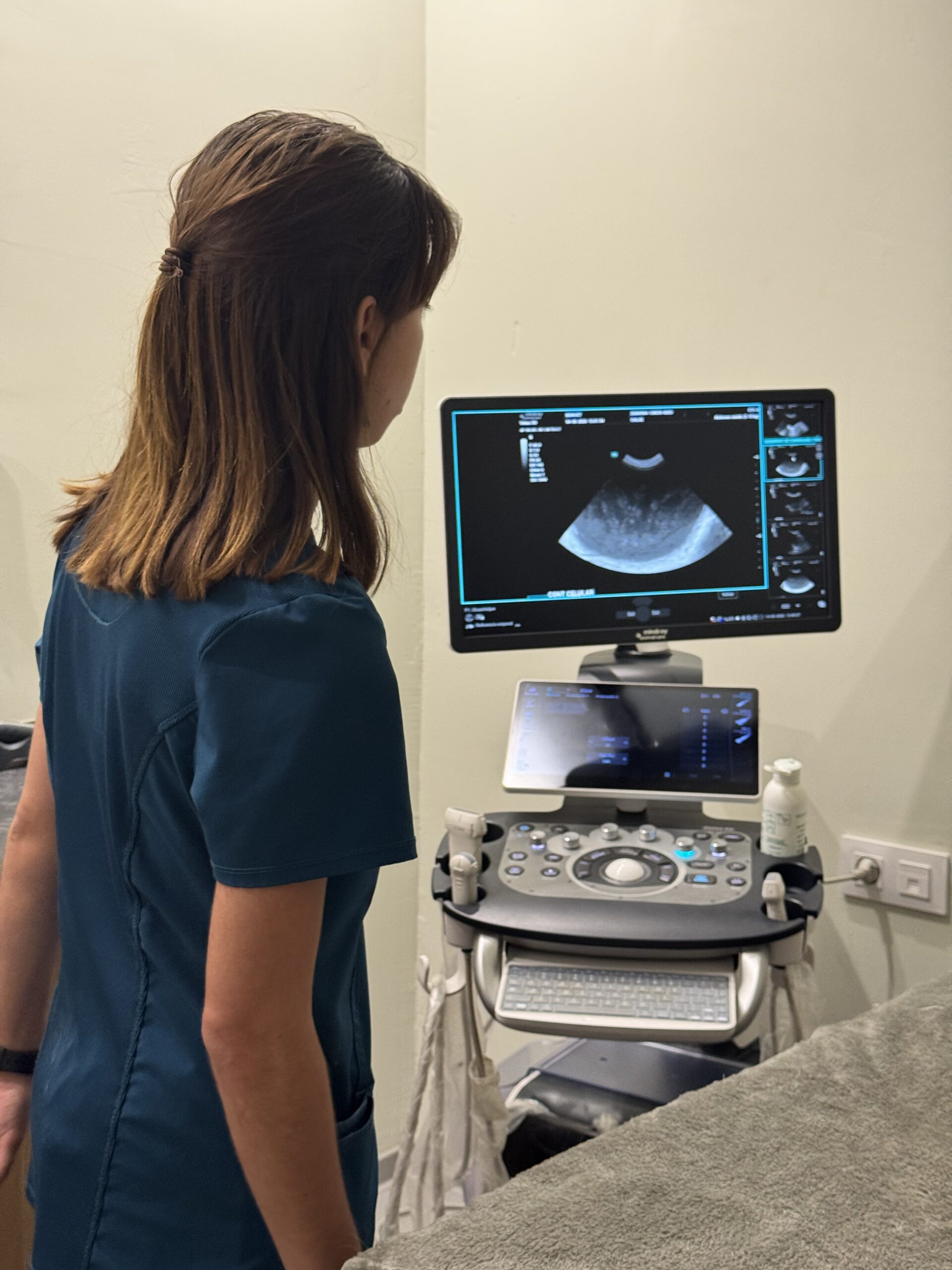
At Benivet Benissawe are specialists in veterinary arthroscopya surgical technique minimally invasive which allows accurate exploration, diagnosis and treatment of joints in dogs and cats. This procedure is performed through small incisions and the use of a high-definition camera, which minimises post-operative pain and significantly speeds up your pet's recovery.
This procedure is ideal for cases of:
Hip or elbow dysplasia
Ligament or meniscus injuries
Arthritis or synovitis
Intra-articular foreign bodies
Thanks to arthroscopy we can intervene precisely and with less surgical aggression, reducing complications and improving the patient's well-being. It is a safe and effective option which forms part of our specialised veterinary surgery unit.
You can find out more about the clinical principles of veterinary arthroscopy in this guide from the American College of Veterinary Surgeons.
The arthroscopy in veterinary medicine represents a key advance in the treatment of joint problems. At Benivet BenissaWe have experience in its application for animals with chronic pain, intermittent lameness or limited mobility that does not improve with conservative treatment.
This technique allows:
Access the joint without open surgery.
Accurate diagnosis of internal disturbances.
Perform joint lavage, fragment resection or ligament reconstruction.
Reduce surgical trauma, risk of infection and hospitalisation time.
In addition, arthroscopy can be complemented with postoperative treatments such as pain management in our veterinary pain unit and rehabilitation programmes.
If you notice that your dog or cat limps, avoids climbing stairs or is stiff when getting up, request a consultation. At Benivet we will assess whether arthroscopy is the most suitable option for your recovery.
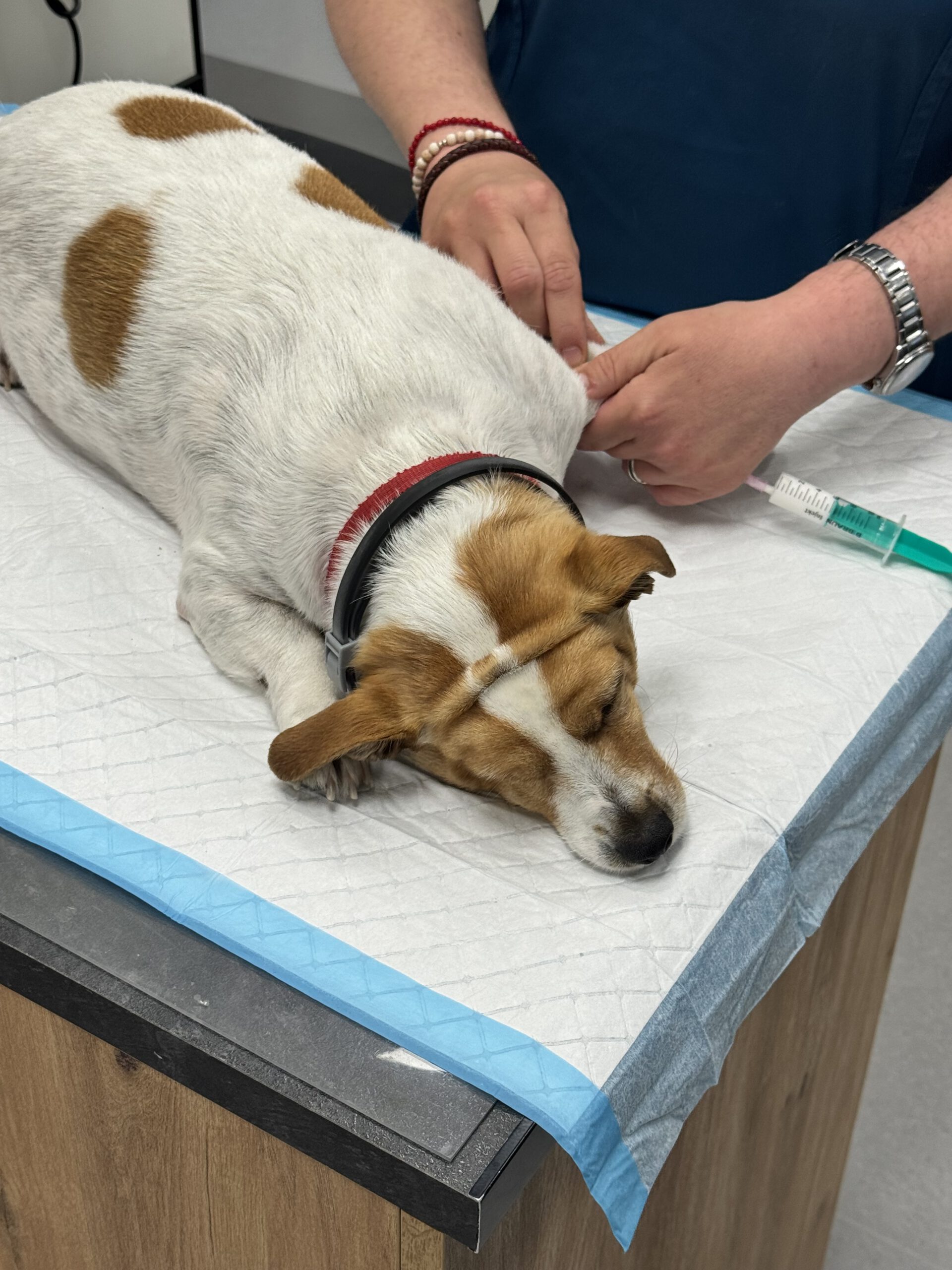
Arthroscopy is a minimally invasive technique indicated for certain joint problems to improve diagnosis and treatment.
It allows direct visualisation of the inside of the joint when other tests do not provide a conclusive diagnosis.
Persistent limping with no clear cause
Suspected internal joint injuries
Accurate assessment of the condition of the joint
In many cases, arthroscopy allows the injury to be treated during the same procedure, with less surgical aggression.
Cartilage or meniscus injuries
Joint fragments
Intra-articular cleaning and repair
As a minimally invasive technique, arthroscopy promotes a faster and more comfortable recovery for the animal.
Reduced postoperative pain
Small incisions
Faster return to mobility
X-rays, CT scans and arthroscopy may all form part of the investigation into lameness or a joint injury, but they do not serve the same purpose. The most appropriate test depends on the affected joint, the symptoms and the results of the orthopaedic examination.
The veterinary X-ray It is usually one of the first tests used to investigate musculoskeletal problems.
You can provide information on:
Fractures and dislocations.
Changes associated with osteoarthritis.
Abnormalities in the shape or alignment of the bones.
Dysplasia and other developmental problems.
Swelling or changes around a joint.
However, some injuries to the cartilage, menisci, ligaments or other internal structures of the joint may not be visible in sufficient detail on an X-ray.
The Veterinary CAT scan It enables detailed images of the joint and bone structures to be obtained from different angles.
It may be recommended for:
To study complex joints.
To assess certain fractures or bone abnormalities.
To detect small joint fragments.
To investigate further a limp whose cause is unclear.
Planning an orthopaedic procedure.
A CT scan helps to provide a better understanding of the location and extent of a lesion, but does not allow it to be treated during the scan itself.
Arthroscopy involves inserting a small camera into the joint to view its internal structures directly.
It can be used for:
To examine the cartilage and other intra-articular structures.
To confirm lesions that are not clearly visible in other tests.
Remove certain sections.
Perform joint lavage.
Treating several lesions during the same procedure.
Unlike an X-ray or a CT scan, arthroscopy is a minimally invasive surgical procedure and is carried out under general anaesthesia. The procedure is planned in conjunction with the department of veterinary anaesthesia and analgesia.
No. Tests are selected on a case-by-case basis and only when they can provide information relevant to the diagnosis or treatment planning.
The process usually begins with an assessment of veterinary orthopaedics and traumatology. After assessing the joint’s range of motion, support, pain and stability, the team determines whether an X-ray is sufficient or whether further investigation is required, such as a CT scan or arthroscopy.
Not all cases of lameness require surgery. Depending on the cause, treatment may include controlled rest, medication, weight management and veterinary monitoring.
Where there is persistent pain, treatment can also be coordinated with the Pain Unit. If a lesion is detected that requires a different type of treatment, the case may be assessed by the Orthopaedics, Traumatology and Spinal Surgery Surgical Unit.
If your pet has already been treated at another clinic, please bring any X-rays, CT scans, test results, reports and details of previous treatment. Reviewing this documentation can help us understand how the condition has progressed and decide whether further tests are needed.
Does your dog or cat have a persistent limp, or do you need to know whether arthroscopy is suitable for them? Request a valuation in Benivet Benissa or call +34 622 325 271.
Benivet Benissa
Av. del País Valencià, 10, 03720 Benissa, Alicante
Telephone: +34 622 325 271
Opening hours: Monday to Friday from 09:30 to 18:30; Saturdays from 10:00 to 13:00.
Trustindex verifica que la fuente original de la reseña sea Google. Muchas gracias a toda la gente que trabaja en Benivet ☺️ Son profesionales y gente muy amable. Mi gata Mini está mucho mejor gracias a ellos. Son un gran equipo y el trato a los animales no puede ser mejor, los tratáis genial. Sin duda siempre volvemos!!Publicado en GoogleTrustindex verifica que la fuente original de la reseña sea Google. Todo genial! Muy recomendable.Publicado en GoogleTrustindex verifica que la fuente original de la reseña sea Google. Súper professionals, es nota que els agrada el que fan. Molt contenta.Publicado en GoogleTrustindex verifica que la fuente original de la reseña sea Google. Atención inmejorable, profesionalidad indiscutible!! Son un equipo de 10! Conocí a Ana y Andrea hace ya 4 años y estoy encantada de poder contar con ellas y confiarles la salud de mis mascotas! Transmiten el amor por la profesion y los animales!! Es un placer poder contar con todo el equipo!! Muchas gracias chic@s !!Publicado en GoogleTrustindex verifica que la fuente original de la reseña sea Google. Onze hond had een splinter in zn poot, we konden direct terecht en uurtje later konden we hem weer ophalen, operatie en een narcoseprik samen voor maar €. 90.00 maar wat een lieve maar vooral professionals......TOPPublicado en GoogleTrustindex verifica que la fuente original de la reseña sea Google. Para mí es el mejor veterinario de la zona , siempre el mejor trato y con los mejores resultados .Publicado en GoogleTrustindex verifica que la fuente original de la reseña sea Google. This vet is amazing. We travel from Calpe to Benissa for their services. The staff are friendly, knowledgeable and so helpful.Publicado en GoogleTrustindex verifica que la fuente original de la reseña sea Google. Estoy muy contenta con este veterinario, la atención siempre ha sido muy buena y personalizada y las veterinarias tratan a Queen con mucho cariño, a pesar de sus ladridos :)Publicado en GoogleTrustindex verifica que la fuente original de la reseña sea Google. Super cercanos, dispuestos siempre a ayudarte y muy pendientes de los animalitos. Son un equipo increíble!
The veterinary arthroscopy is a minimally invasive technique that allows for visualise and treat injuries within the joint (e.g. shoulder, elbow, knee), particularly in cases of persistent lameness, joint pain or suspicion of intra-articular lesions. At Benivet Benissa we assess each case with an orthopaedic examination and, if the cause needs to be confirmed or the procedure planned, we recommend the following tests only when they provide useful information:
Veterinary practice in BenissaClinical history, complete examination and first approach to the case.
Veterinary orthopaedics and traumatologySpecific assessment of lameness, pain and joint stability, and decision on the most appropriate approach.
Veterinary radiologyFirst approach to assess bone, osteoarthritis, dysplasia and changes compatible with joint injury.
Veterinary CAT scanuseful in complex cases to study joint structures in more detail and to plan treatment.
Blood testspart of the pre-anaesthetic work-up to increase the safety of the procedure, especially in elderly patients or those with previous illnesses.
If an intervention is programmed, we coordinate the protocol with anaesthesia and analgesia for multimodal pain management before, during and after. And if overweight influences joint loading, we address it with veterinary nutrition to improve recovery and outcomes.
👉 If you want an assessment for lameness or joint pain, request an appointment here or call +34 622 325 271.
According to the DGT, when travelling with your pet in the car, you must place a separator to prevent your pet from distracting you and
Only a veterinarian can assess the health status of the animals, taking also into account other circumstances such as the type of
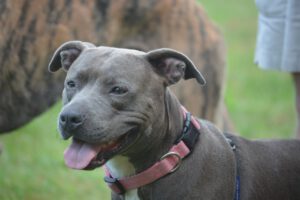
Domestic or companion animals, particularly those belonging to the canine species, shall also be classified as potentially dangerous,
Arthroscopy forms part of the assessment and treatment of lameness and joint pain, alongside orthopaedic assessment, imaging tests and pain management.
Assessment of lameness, pain and joint stability to determine whether arthroscopy is the appropriate option.
Initial assessment to evaluate bone, osteoarthritis, dysplasia and changes consistent with joint damage.
Detailed examination of complex joints and small fragments to plan the procedure.
Arthroscopy is carried out under general anaesthetic, with pain management provided before, during and after the procedure.
Management of persistent joint pain and post-operative pain as part of a comprehensive care plan.
When the detected injury requires a different type of surgical procedure on a bone, joint or the spine.
The arthroscopy is a minimally invasive technique that allows for visualising the inside of a joint by means of a camera and carry out, where appropriate, therapeutic procedures (e.g. to remove fragments, wash out the joint or treat selected lesions). It is often used in elbow, knee, shoulder y carpus/tarsus according to the clinical case.
It is appreciated when there is a need for a detailed intra-articular examination or a more conservative approach to the joint. Common scenarios include chronic lameness, persistent joint painsuspicion of cartilage/meniscus injuries or need for joint washing. The indication is confirmed after medical history, examination and tests appropriate.
Depending on the case, the following may be recommended X-rays, ultrasound o analytics pre-surgery to assess the general condition and to assist in the anaesthetic plan. The final decision is taken after reviewing the orthopaedic examination and imaging findings.
Arthroscopy is performed with general anaesthesia y sterile technique. Small incisions are used to insert the camera and fine instruments. Upon completion, your pet is transferred to recovery with pain management and monitoring. Prior to discharge, you will receive written instructions.
Rest controlled, protection of incisionsadministration of the prescribed medication y revisions on the dates indicated. The following are recommended short walks on a leashavoid jumps and keep a watchful eye on redness, swelling, pain or discharge in the area. We will tell you alarm signals and how to act.
No. Arthroscopy can diagnose or treat specific lesions, but the result is improved with a integral plan: analgesia tight, rehabilitation where indicated and controls to adapt the activity. We will give you a monitoring timetable with realistic objectives.
Do you have any doubts about care, treatment or prevention for your pet? Consult our section of Frequently Asked Questions where we solve the most common queries about dogs and cats.