How should dogs (and other pets) be carried in the car according to the DGT?
According to the DGT, when travelling with your pet in the car, you must place a separator to prevent your pet from distracting you and

The veterinary oncology is responsible for the diagnosis, monitoring and treatment of the tumour processes in dogs and cats, with the aim of improving their quality of life and accompany the patient and family throughout the clinical process. An early and well-planned approach allows informed and tailored decisions to be made in each case.
At Benivet Benissa we approach oncology from a integral and personalised visionWe assess each situation individually, explaining the options available and coordinating treatment and follow-up according to the real needs of each pet.
Benivet Benissa - Av. del País Valencià, 10, 03720 Benissa -
M-F 9:30-18:30 - S 10:00-13:00
Cancer is one of the most common diseases in dogs and cats, and catching it early can make all the difference. At Benivet Benissawe offer a specialised service in veterinary oncologyfocused on the diagnosis and treatment of tumours to improve your pet's quality of life.
We perform advanced tests such as biopsies, ultrasound scans y laboratory analysiswhich allow us to accurately identify the cause. Depending on the case, we apply personalised treatments that may include surgery, chemotherapy o palliative carealways with a holistic and tailored approach.
If your dog or cat is experiencing lumps, weight loss, fatigue or has been diagnosed with cancer, at Benivet Benissa we help you with professional and close oncological care.
At Benivet BenissaWe know how hard it can be to receive a diagnosis of cancer in your dog or cat. That's why our veterinary oncology is designed to accompany you with closeness and clinical rigour, offering options that improve your pet's quality of life.
Cancer can appear as skin tumoursinternal masses or more complex diseases. With early diagnosis and appropriate treatment, many pets can maintain a full life. In our clinic we perform ultrasound scans and X-rays, biopsies and clinical analysesand we design an individualised therapeutic plan that may include oncological surgery, chemotherapy o palliative care.
In addition, we adapt the veterinary nutrition to strengthen the immune system and maintain a good body condition during treatment.
According to the American Veterinary Medical Association (AVMA)Cancer is one of the leading causes of death in older pets, but with proper management, both survival and quality of life can be improved.
If you are looking for a clinic with experience in oncology for dogs and cats in Benissa, Teulada, Calpe or Morairain Benivet Benissa we are ready to offer you the best veterinary care in a trusted environment.
Veterinary oncology allows to diagnose, monitor and treat tumour processes with a focus on the pet's quality of life.
The appearance of lumps or visible changes requires veterinary assessment to determine their nature.
Cutaneous or subcutaneous masses
Lesions that grow or change in appearance
Nodules detected at check-ups
When a tumour process is suspected or confirmed, oncology allows us to assess options and plan the most appropriate approach.
Diagnostic confirmation by testing
Assessment of therapeutic options
Coordination with surgery or other specialties
Monitoring allows to control the evolution of the process and to prioritise the welfare of the pet at each stage.
Control of the disease over time
Pain management and associated symptoms
Accompanying the guardian and the patient
Receiving a cancer diagnosis can raise many questions. The next step is to gather the necessary information to understand what type of tumour your pet has, how it might progress, and what treatment options are available.
Not all tumours progress in the same way, nor do they all require the same treatment. For this reason, each case must be assessed on an individual basis, taking into account the diagnosis, the extent of the disease, the patient’s general condition and the family’s priorities.
Finding a lump or mass does not always reveal its nature. To guide or confirm the diagnosis, it may be necessary to analyse a sample using a veterinary cytology or a biopsy.
Cytology involves examining cells taken from the lesion and can provide an initial indication in many cases. A biopsy allows a sample of tissue to be analysed and can provide more comprehensive information about the type of tumour and its characteristics.
Depending on the result, the team will explain to you:
What type of injury has been identified?
Whether it is considered benign or malignant.
If further tests are required.
What behaviour can be expected?
What treatment options might be considered?
It is not yet possible to determine what information this is.
In some cases, the tumour grade is also assessed; this describes certain microscopic characteristics relating to its likely behaviour.
Once a tumour has been confirmed, it may be advisable to carry out an extent or staging assessment. The aim is to determine the size and location of the tumour, check whether it has affected nearby structures, and look for any signs of spread.
Depending on the type of tumour, this investigation may include:
Blood tests to assess general health, detect abnormalities and check the functioning of various organs.
Urinalysis to complement the renal and urinary assessment.
Veterinary X-rays to examine the chest, abdomen or specific bony structures.
Veterinary ultrasound to examine abdominal organs, lymph nodes and any internal masses.
Veterinary CAT scan when it is necessary to determine the extent of an injury more precisely or to plan a procedure.
Cytology or biopsy of lymph nodes and other tissues where indicated.
Not all patients need all of these tests. They are selected based on the type of tumour, its location and the information that each procedure can provide.
The aim may vary depending on the diagnosis and the patient’s condition. Before starting, it is important to understand whether the treatment is intended to:
Remove the tumour completely where possible.
To control or slow the progression of the disease.
To reduce the size of a dough.
To prevent or relieve certain symptoms.
To maintain comfort and quality of life.
Combine several of these options.
The plan may include surgery, medical treatment, supportive care or palliative care. Some pets need a single procedure, whilst others require follow-up appointments or treatment over a longer period.
If an operation is planned, the case can be co-ordinated with the services of veterinary surgery o soft tissue surgery.
Before the procedure, the team at veterinary anaesthesia and analgesia adapts the protocol to the patient’s clinical condition and needs.
To make an informed decision, it may be helpful to ask:
Has the type of tumour been confirmed?
Is a biopsy or any further tests required?
Does the condition appear to be localised or has it spread?
What is the aim of each option?
What benefits can be expected?
What risks or adverse effects might occur?
How might the treatment affect your daily life?
How many appointments and check-ups will be needed?
What would happen if we decided not to undergo a specific treatment?
Are there any options that focus solely on comfort?
What signs should we look out for at home?
When should the next service be carried out?
Booking an oncology consultation does not oblige you to start a specific course of treatment. Its purpose is to understand your situation, clarify any doubts and compare the available options.
During treatment or follow-up, look out for any changes in:
Appetite and water intake.
Weight and muscle mass.
An active lifestyle and a desire to socialise.
Mobility and the ability to rest.
Breathing.
Vomiting or diarrhoea.
Pain or discomfort.
Appearance and size of the lesion.
Tolerance to medication.
Number of good days and days when symptoms were more severe.
Making a note of this information or recording videos can help you assess your pet’s progress between appointments. Do not change the doses or stop treatment without first discussing it with the veterinary team.
If symptoms persist, we can arrange a follow-up appointment with the Benivet Benissa Pain Clinic.
If your appetite decreases, you lose weight or find it difficult to maintain an appropriate body condition, it may be advisable to have an assessment of veterinary nutrition.
In patients with other medical conditions or undergoing long-term treatment, monitoring can also be integrated with veterinary internal medicine.
Please contact the team if your pet shows any of the following symptoms:
Difficulty breathing.
Severe weakness or loss of consciousness.
Pain that does not appear to be under control.
Repeated vomiting or diarrhoea.
Persistent refusal to eat or drink.
Bleeding.
Fever, shivering or severe fatigue.
Inflammation or problems with a surgical wound.
Adverse effects following administration of the medication.
A sudden deterioration in his general condition.
Some patients may require treatment or monitoring in our veterinary hospitalisation.
If your pet has already been treated at another clinic, please bring any reports, cytology or biopsy results, laboratory tests, imaging scans and details of previous treatments. Reviewing all this documentation helps us to understand the case better and avoid unnecessary repeat tests.
Veterinary professionals can also submit the documentation via the Case studies from Benivet Benissa.
Has your dog or cat been diagnosed with cancer, or do you need to have a lump checked? Book a veterinary oncology consultation or call +34 622 325 271.
Benivet Benissa
Av. del País Valencià, 10, 03720 Benissa, Alicante
Telephone: +34 622 325 271
Opening hours: Monday to Friday from 09:30 to 18:30; Saturdays from 10:00 to 13:00.
Trustindex verifica que la fuente original de la reseña sea Google. Muchas gracias a toda la gente que trabaja en Benivet ☺️ Son profesionales y gente muy amable. Mi gata Mini está mucho mejor gracias a ellos. Son un gran equipo y el trato a los animales no puede ser mejor, los tratáis genial. Sin duda siempre volvemos!!Publicado en GoogleTrustindex verifica que la fuente original de la reseña sea Google. Todo genial! Muy recomendable.Publicado en GoogleTrustindex verifica que la fuente original de la reseña sea Google. Súper professionals, es nota que els agrada el que fan. Molt contenta.Publicado en GoogleTrustindex verifica que la fuente original de la reseña sea Google. Atención inmejorable, profesionalidad indiscutible!! Son un equipo de 10! Conocí a Ana y Andrea hace ya 4 años y estoy encantada de poder contar con ellas y confiarles la salud de mis mascotas! Transmiten el amor por la profesion y los animales!! Es un placer poder contar con todo el equipo!! Muchas gracias chic@s !!Publicado en GoogleTrustindex verifica que la fuente original de la reseña sea Google. Onze hond had een splinter in zn poot, we konden direct terecht en uurtje later konden we hem weer ophalen, operatie en een narcoseprik samen voor maar €. 90.00 maar wat een lieve maar vooral professionals......TOPPublicado en GoogleTrustindex verifica que la fuente original de la reseña sea Google. Para mí es el mejor veterinario de la zona , siempre el mejor trato y con los mejores resultados .Publicado en GoogleTrustindex verifica que la fuente original de la reseña sea Google. This vet is amazing. We travel from Calpe to Benissa for their services. The staff are friendly, knowledgeable and so helpful.Publicado en GoogleTrustindex verifica que la fuente original de la reseña sea Google. Estoy muy contenta con este veterinario, la atención siempre ha sido muy buena y personalizada y las veterinarias tratan a Queen con mucho cariño, a pesar de sus ladridos :)Publicado en GoogleTrustindex verifica que la fuente original de la reseña sea Google. Super cercanos, dispuestos siempre a ayudarte y muy pendientes de los animalitos. Son un equipo increíble!
The veterinary oncology is indicated when a bulgeA lesion that grows or does not resolve, weight loss without a clear cause, abnormal bleeding, persistent apathy or test results that suggest a tumour process. At Benivet Benissa we start with a complete assessment and, if it is necessary to confirm the diagnosis or plan the treatment, we recommend the following tests only when they provide useful information:
Veterinary practice in BenissaClinical history, complete examination and prioritisation of the diagnostic plan.
Microscopy and cytologyFirst quick approach to orientate the type of lesion in many lumps/masses and decide on the next step.
Blood tests y urinalysisto assess general condition, liver/kidney function, anaemia/inflammation and safety if sedation, surgery or treatments are considered.
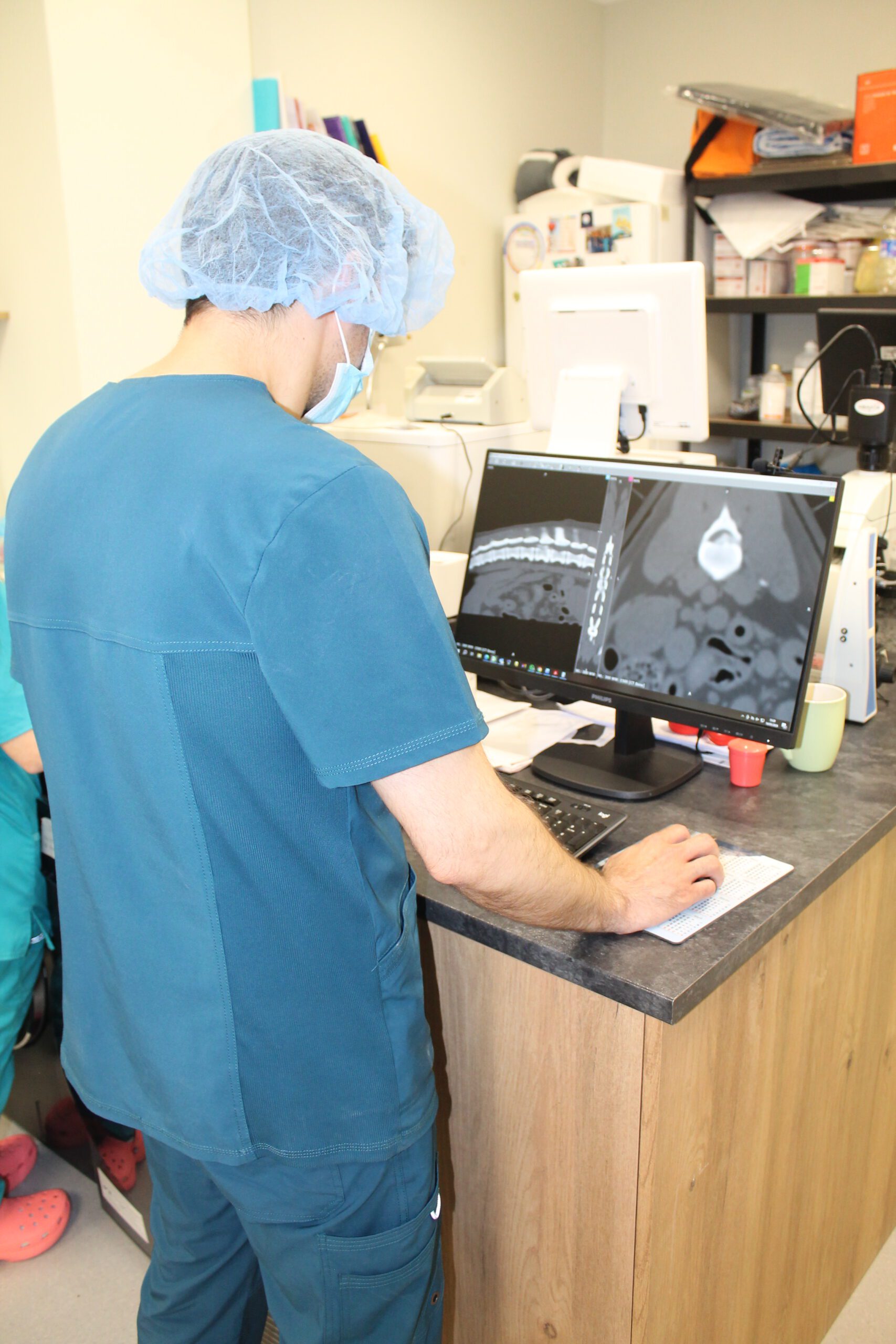
Veterinary ultrasounduseful to study the abdomen (organs, lymph nodes, masses, fluid) and to orientate the extension of the process.
Veterinary radiologyIn some cases, to assess bone involvement or to monitor progress.
Veterinary CAT scanrecommended when we need a more detailed study to staging o precise planning (complex areas, surgery, deep structures).
If intervention is proposed, we coordinate the case with veterinary surgery and the protocol of anaesthesia and analgesia for a safe procedure and good pain control. If the patient needs intensive monitoring or treatment, we can rely on veterinary hospitalisation. And if there are co-morbidities or long-term follow-up, we integrate it with veterinary internal medicine.
👉 If you have detected a lump or have doubts about a lesion, request an appointment here or call +34 622 325 271.
According to the DGT, when travelling with your pet in the car, you must place a separator to prevent your pet from distracting you and
Only a veterinarian can assess the health status of the animals, taking also into account other circumstances such as the type of
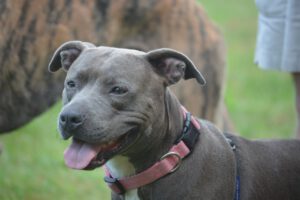
Domestic or companion animals, particularly those belonging to the canine species, shall also be classified as potentially dangerous,
The diagnosis, staging and treatment of a tumour are based on laboratory tests, diagnostic imaging and other clinical services, depending on the individual case.
An initial assessment to determine the nature of the lesion in lumps and masses and decide on the next course of action.
Assess the patient’s general condition, organ function and safety prior to sedation, surgery or treatment.
Examination of abdominal organs, lymph nodes and internal masses to determine the extent of the condition.
A detailed survey for site assessment and precise planning in complex or deep areas.
Where treatment involves the removal of the tumour, with a tailored anaesthesia and pain management protocol.
It helps to maintain weight, muscle mass and good physical condition during treatment.
Some warning signs are lumps that increase in sizeThe most common symptoms include weight loss, weight loss, non-healing wounds, bleeding, persistent coughing, changes in appetite, recurrent vomiting, lameness or prolonged decay. However, many tumours do not produce symptoms in the early stages, so veterinary check-ups are key to early detection.
Depending on the case, this may include:
Cytology and biopsy
Ultrasound and digital radiography
TAC to assess extent and plan surgery
Full analytics
Specific tests according to organ affected
The aim is to obtain an accurate diagnosis and appropriate staging in order to choose the best treatment.
No. In veterinary medicine, the priority focus is on the animal welfare. We adjust doses, drugs and protocols to minimise side effects. Many patients tolerate chemotherapy very well and maintain a good quality of life during treatment.
Depending on the type of tumour, options may include:
Oncological surgery
Chemotherapy
Immunomodulatory treatments
Pain management and palliative care
At Benivet Benissa we design an individualised plan, always evaluating risks, benefits and prognosis.
The prognosis varies depending on the type of tumour, location, rapidity of growth and early detection. Some tumours are curable with surgery; others can be controlled for months or years with combined treatments. We assess each case with clarity and transparency, without raising false expectations.
Some keys are: maintaining good nutrition, controlling pain, ensuring adequate rest, monitoring changes in appetite and energy, following medication as prescribed and attending check-ups. The joint work between guardian and veterinarian is fundamental for the wellbeing of the oncology patient.
Do you have any doubts about care, treatment or prevention for your pet? Consult our section of Frequently Asked Questions where we solve the most common queries about dogs and cats.