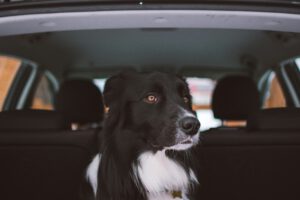
How should dogs (and other pets) be carried in the car according to the DGT?
According to the DGT, when travelling with your pet in the car, you must place a separator to prevent your pet from distracting you and
The Veterinary Total and Partial Prosthetics Surgical Unit specialises in the treatment of serious joint pathologies in dogs that significantly affect mobility and quality of life, such as certain cases of dysplasia, advanced osteoarthritis or irreversible joint damage.
At Benivet Benissa we indicate the fitting of total or partial prostheses only after a thorough assessmentThe new system integrates advanced imaging, precise surgical planning, and a pain management and rehabilitation protocol aimed at safe functional recovery.
Benivet Benissa - Av. del País Valencià, 10, 03720 Benissa -
M-F 9:30-18:30 - S 10:00-13:00
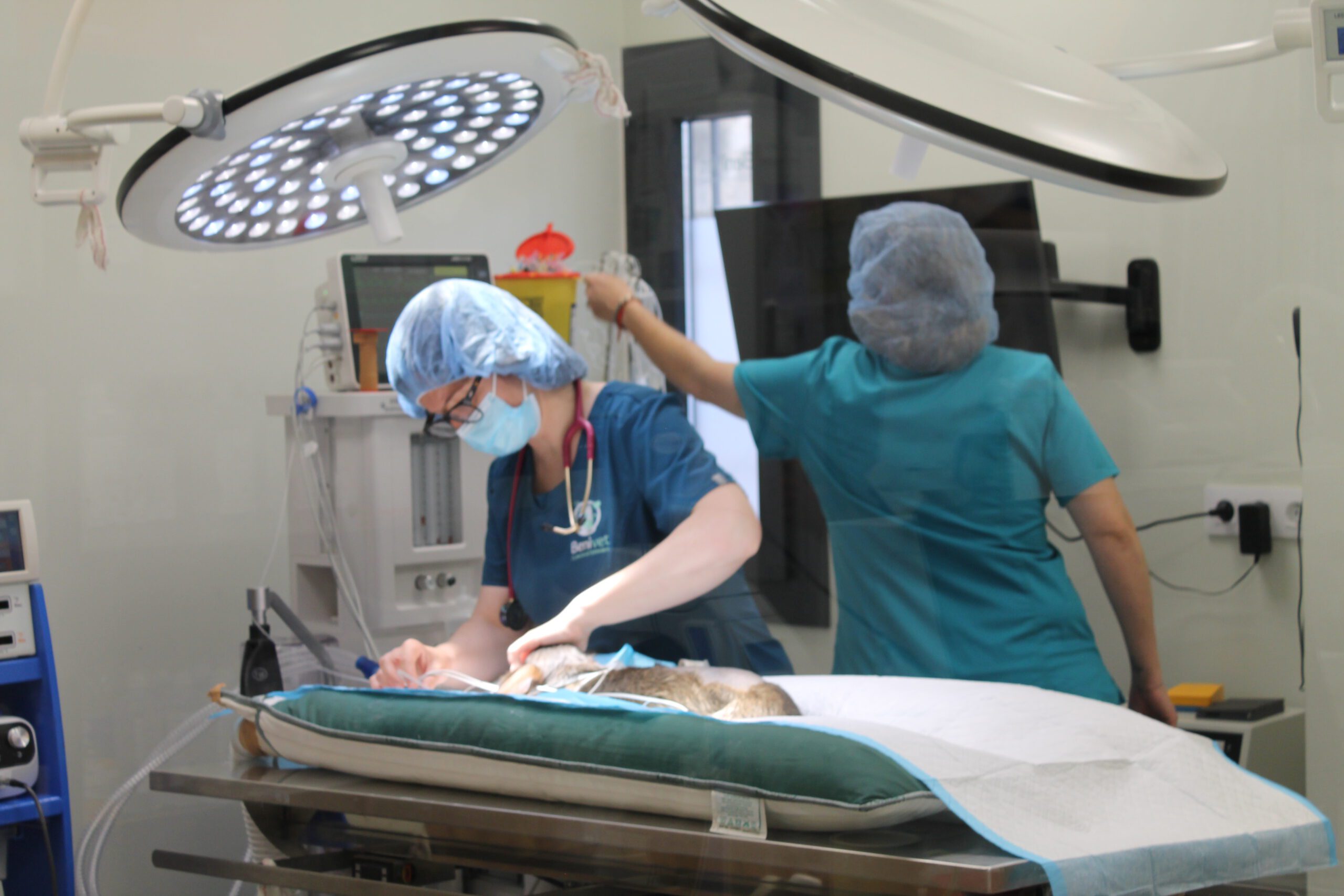
At Benivet Benissawe have a surgical unit specialising in veterinary prosthesesThe aim is to restore mobility to dogs, cats and other pets after severe injuries, degenerative joint diseases or congenital malformations.
We place total or partial prostheses designed to replace damaged joints or improve support in compromised limbs. Each intervention is planned on an individual basis, using 3D imaging technologyThe use of anatomical models and high-precision biocompatible materials.
The process includes a complete orthopaedic assessmentThe follow-up from the area of advanced surgery and controlled recovery supported by specialised hospitalisation.
Trust Benivet to give your pet the advanced surgical care it deserves.
At Benivet Benissawe carry out total and partial prosthesis surgeries for dogs, cats and other pets that have lost mobility due to joint injuries, degenerative diseases or congenital malformations.
Thanks to the combination of surgical expertiseUsing advanced planning and biocompatible materials, we implant prostheses that restore function with precision. We address cases of total joint replacement, as well as partial devices to improve support and stability.
Prior to each intervention, we carry out an individual study in our area of veterinary orthopaedic surgeryin conjunction with the 3D diagnostic imaging to achieve a perfect fit. After the surgery, we apply specific protocols from the advanced functional recoveryThe focus is on restoring mobility without pain.
According to the International Society of Veterinary Orthopaedic Surgery (ISVOS)In addition, well-fitted prostheses can restore up to 90% of function in animals that were previously barely able to move.
If you live in Benissa, Moraira, Calpe or Teuladaand your pet needs a surgical solution in order to walk normally again, we can help. Benivet you will find a team ready and committed to their recovery.
Your partner deserves to move freely and painlessly. We make it possible.
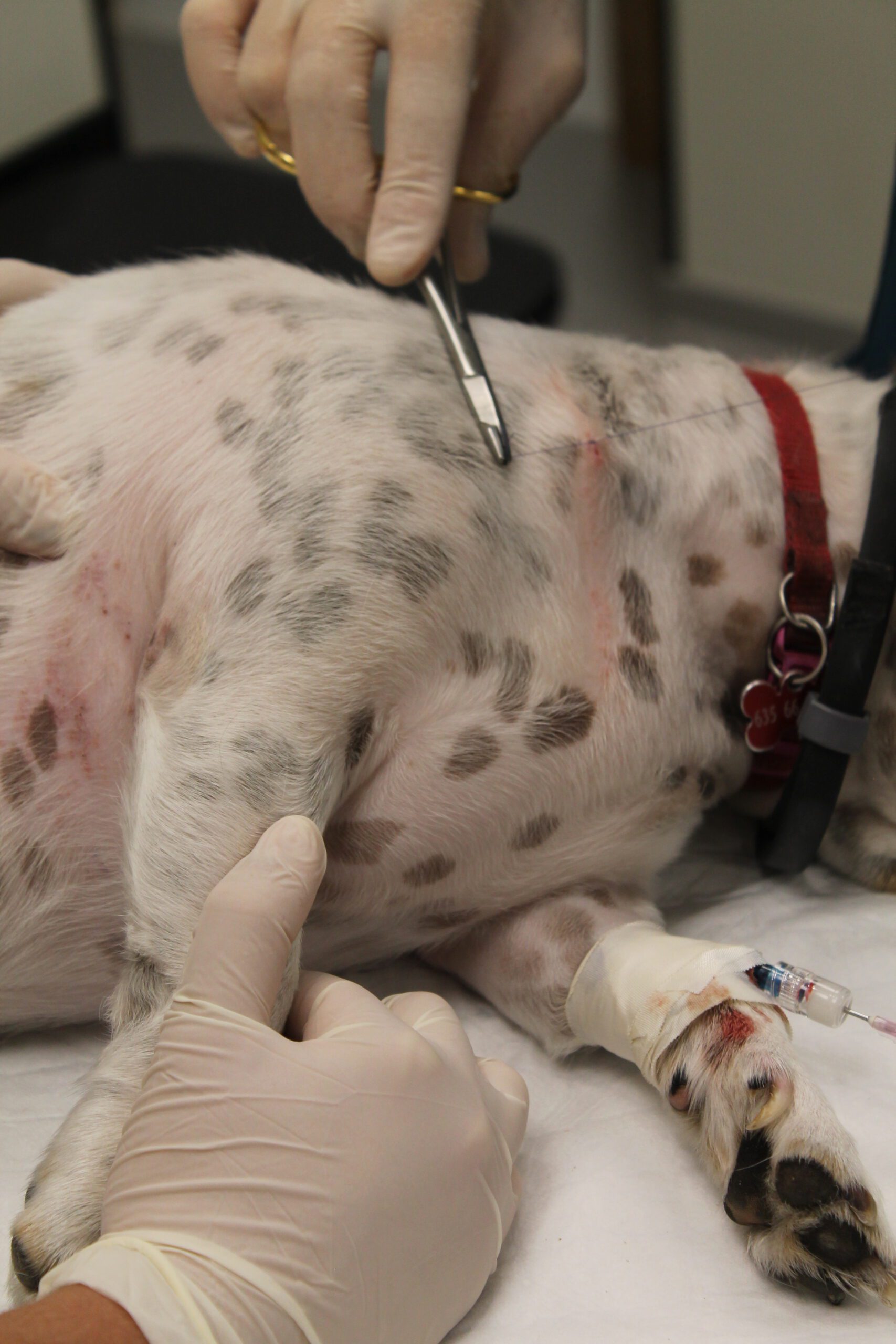
Total or partial prostheses are used in selected cases to restore joint function and improve quality of life when other options are not sufficient.
When a joint has advanced damage, the fitting of a prosthesis may be the best therapeutic alternative.
Severe osteoarthritis
Advanced joint degeneration
Persistent pain that limits mobility
In some patients, prosthetic surgery is considered after failure to obtain adequate results with previous conservative or surgical treatment.
Lack of response to medical treatment
Previous surgeries without functional improvement
Chronic refractory pain
The indication for a prosthesis requires a thorough examination of the patient and the affected joint.
Clinical evaluation and imaging tests
Mobility and quality of life analysis
Careful selection of the type of prosthesis
A total or partial prosthesis may be an option for certain dogs with a severely damaged joint, persistent pain and a significant loss of mobility. However, a diagnosis of osteoarthritis or dysplasia does not automatically mean that an implant is necessary.
Before recommending this operation, we carry out an individual assessment to determine whether the prosthesis can bring about a significant improvement in function and whether the patient meets the necessary criteria for the operation and recovery.
We assess how the joint problem affects the animal’s daily life:
Difficulty getting up or lying down.
Persistent lameness.
Less tolerance for walks.
Difficulty climbing steps or getting into the car.
Loss of muscle mass.
Pain that limits rest or activity.
A gradual decline in their quality of life.
You can also check How to recognise pain in a pet even if it doesn’t show it.
Where symptoms are mild or can still be managed by other means, it may be preferable to continue with conservative treatment and carry out regular check-ups from the Pain Unit.
Before considering a prosthesis, we review what treatments have been used and how the patient has responded to them.
It is important to know whether the following have been tested:
Pain-relieving or anti-inflammatory medication.
Weight management.
Modification of the exercise.
Rehabilitation or physiotherapy.
Intra-articular treatments.
Previous orthopaedic operations.
Other measures to improve mobility.
An inadequate response does not in itself mean that a prosthesis is the only option. The decision must be based on the diagnosis, the condition of the joint and the animal’s functional needs.
Planning requires a precise understanding of the patient’s joint damage and anatomy.
The assessment begins at the veterinary orthopaedics and traumatology, where we assess gait, pain, mobility and joint stability.
Tests may include:
Veterinary X-rays to assess joint function, alignment and bone changes.
Veterinary CAT scan to obtain detailed measurements and plan complex cases.
Further tests when an additional illness or injury is suspected.
These images help to determine the type and size of the implant and to assess whether the bone can provide adequate support.
Age is not the only factor taken into account when deciding on treatment. Other considerations include whether bone development is sufficiently advanced, the cause of the problem and the impact it has on mobility.
Before the operation, we carry out a full examination and may recommend a blood tests and a urinalysis to assess the patient’s general condition and plan the anaesthesia.
Please inform the team of any pre-existing conditions, regular medication or any recent changes. If there is a medical condition that requires monitoring, the procedure can be coordinated with veterinary internal medicine.
Body weight affects the load borne by the joints and the recovery process. If a person is overweight, it may be advisable to lose weight before or after the operation, following a safe and gradual plan.
The service provided by veterinary nutrition It can help to tailor the diet, maintain muscle mass and set realistic goals for each patient.
Surgery is only part of the treatment. To protect the joint and the implant during recovery, the family must be able to follow the post-operative instructions.
The plan may require:
Rest and initial restriction of activity.
Short, supervised walks on a lead.
Avoid jumping, running, rough play and stairs.
Administration of medication.
Monitoring the wound.
Check-ups and follow-up imaging tests.
Gradual increase in exercise.
Rehabilitation where indicated.
Adapting the home with non-slip surfaces.
Following surgery, some patients require monitoring in our veterinary hospitalisation. The protocol is also coordinated with the anaesthesia and analgesia to tailor anaesthesia and pain management.
Yes. Depending on the joint, the patient’s age, the severity of the injury and the patient’s needs, medical treatment, weight management, rehabilitation or other surgical techniques may be considered.
For certain joint injuries, a veterinary arthroscopy. Cases requiring a different type of intervention can be examined in the Orthopaedics, Traumatology and Spinal Surgery Surgical Unit.
The aim of the assessment is to compare the alternatives and recommend the option that offers an appropriate balance between expected benefits, risks and recovery requirements.
If your dog has already been assessed at another clinic, please bring along any X-rays, CT scans, test results, surgical reports and details of previous treatments. Reviewing all this documentation helps us to understand your dog’s medical history and avoid unnecessary repeat tests.
Veterinary professionals can submit clinical information via the Case studies from Benivet Benissa.
Does your dog suffer from severe joint pain, or would you like to know if he might be a candidate for a prosthetic limb? Request a specialist assessment or call +34 622 325 271.
Benivet Benissa
Av. del País Valencià, 10, 03720 Benissa, Alicante
Telephone: +34 622 325 271
Opening hours: Monday to Friday from 09:30 to 18:30; Saturdays from 10:00 to 13:00.
 Publicado en Google
 Оксана Карпенко6 Octubre 2026
Trustindex verifica que la fuente original de la reseña sea Google.
Estamos muy agradecidos con el equipo de Benivet Benissa por la atención y el cuidado que han tenido con nuestro perro. Llegamos a la clínica después de varias semanas de problemas en la piel y de haber probado diferentes tratamientos sin conseguir una mejoría real. Nuestro Yorkshire, que ya tiene 14 años, tenía heridas, zonas muy inflamadas y pérdida de pelo. En Benivet realizaron las pruebas necesarias y finalmente encontraron la causa: una demodicosis grave con una infección bacteriana secundaria. Nos explicaron todo con mucha claridad y empezamos un tratamiento específico. Aunque el tratamiento todavía no ha terminado, la mejoría ha sido enorme: las heridas han desaparecido, la piel está mucho mejor, las zonas oscuras de las patas están desapareciendo y el pelo ya está empezando a crecer de nuevo. En la última revisión todavía quedaban algunas bacterias, por lo que nos han prolongado el tratamiento una semana más. Queremos agradecer especialmente la profesionalidad, la atención y la paciencia que han tenido con nosotros y con nuestro pequeño. Después de todo lo que habíamos pasado, por fin sentimos que nuestro perro está en buenas manos. ❤️ Muchas gracias a todo el equipo de Benivet Benissa. 🐶❤️Publicado en Google Ian Hunt Solo9 Septiembre 2026Had a CT scan on Tues, operation on Wed and they saved my dog! All of the team were exceptional! Thank you All!!Publicado en Google
 Willem Pieffers8 Septiembre 2026Durante los últimos dos meses hemos vivido momentos muy difíciles y llenos de incertidumbre. Nuestro galgo macho de 5 años se rompió una pata y además tenía un tumor. Para resumir una historia bastante larga: afortunadamente resultó no ser cáncer, pero finalmente tuvieron que amputarle la pata y ha pasado por momentos de mucho dolor. Estamos enormemente impresionados y agradecidos con todo el personal de esta clínica. Tanto el equipo de veterinarios como el personal de apoyo se comunican perfectamente, son muy empáticos y atentos, pero al mismo tiempo proactivos y tremendamente profesionales. Sinceramente, no tenemos ni un solo punto de crítica. Estamos simplemente muy felices de haber llegado a esta clínica y, sin ninguna duda, a partir de ahora serán nuestros veterinarios de confianza. **Gracias por todo, querido equipo de la Clínica Veterinaria Benivet.** ❤️ Willem y JaviPublicado en Google
 Vanessa Torres Martínez8 Septiembre 2026Excepcional es poco. Fuimos por una urgencia y no pude quedar más encantada. Trato súper genial, seguimiento super y personalmente volvería 100%Publicado en Google
 Sixtine Lamarque15 Agosto 2026Fuimos el viernes por la tarde porque nuestro gato se comió un hilo largo. Las veterinarias fueron súper pacientes a pesar de que el gato se puso peleón por el miedo. Le hicieron ecografía y luego lo metieron a cirugía casi inmediatamente. El cirujano fue excelente, nos explicó todo el procedimiento y nos avisó por WhatsApp cuando estuvo listo el gatito, se quedó en observación y al día siguiente lo hemos recogido. La operación fue impecable y el gatito está en casa, la sutura está perfecta. Fueron excepcionales.Publicado en Google
 Alejandro Blázquez15 Agosto 2026Lleve a mi gato de 6 años de urgencia porque se había tragado un hilo largo y gordito, y por la mañana vomitó un trozo. Menos mal que lo hice ya que al día siguiente era festivo, y haber esperado más habría resultado seguramente en necrosis y perforaciones intestinales. Mi gatito fue muy bien atendido por todos los veterinarios. Lo sedaron porque estaba nervioso, le hicieron ecografía para encontrar el hilo en el yeyuno, ya medio plegado, y lo operaron. Fue caro pero lo pagaría de nuevo, porque la vida de mi gatito no tiene precio y lo atendieron aún cuando iban a empezar después de su hora de cierre. Además está mañana al recogerlo estaba bien, tranquilo y dolorido, y la sutura se ve super limpia y bien hecha. Mis agradecimientos a Constantino y al resto de veterinarias que atendieron a mi gato.Publicado en Google
 Roger Llorens Salvador14 Agosto 2026No tenemos más que agradecimiento para todo el equipo de Benivet Benissa. Llevamos a nuestro perro Dachs para una cirugía de columna delicada —una hernia que le comprimía la médula— y desde el primer minuto nos transmitieron una tranquilidad enorme. Incluso nos avisaron de la dirección exacta para no confundirnos con otra clínica que hay a pocos metros: un detalle pequeño que ya dice mucho de cómo trabajan. Queremos destacar especialmente a dos personas. Al traumólogo, Constantino, que hizo un trabajo impecable: retiró toda la hernia y liberó la médula sin complicaciones. Y a la anestesista, Ana, que cuidó cada detalle —algo nada menor en una intervención así—. Gracias a ambos, en las primeras 24 horas Dachs ya recuperaba movilidad voluntaria en la pata. Cuando surgió un pequeño imprevisto con la sonda, lo resolvieron al momento y con total profesionalidad. Pero si algo destaca por encima de lo médico es el trato humano de todo el equipo. Nos mantuvieron informados con mensajes constantes y cercanos, nos escribían para contarnos que Dachs "se portaba muy bien", que nos deseaba buenas noches, e incluso se adelantaron ofreciéndonos un arnés de apoyo por si lo necesitaba. Se nota que aquí no solo tratan a los animales: los cuidan de verdad. Gracias de corazón a Constantino, a Ana y a todo el equipo de Benivet.Publicado en Google
 Jorge Sausalima13 Agosto 2026Muy contento con benivet, un buen servicio y mis animales están en muy buenas manos con ellas. De lo mejor de la zona.
The Total and Partial Prosthesis Surgical Unit is indicated when a joint is severely damaged and the aim is to reduce pain and restore functionespecially in selected cases of advanced arthrosisWe can also provide you with a range of other options that do not provide you with an acceptable quality of life. At Benivet Benissa we assess each case on an individual basis and, if it is necessary to confirm the extent or plan the surgery with precision, we recommend the following tests only when they provide useful information:
Veterinary practice in BenissaThe following is a brief history, complete examination and initial assessment of the case.
Veterinary orthopaedics and traumatologySpecific orthopaedic assessment (gait, pain, joint ranges and stability) and decision on the most appropriate approach.
Veterinary radiologyThe basis for assessing the joint, degree of osteoarthritis and bone changes that condition the indication.
Veterinary CAT scanRecommended for prosthetic candidates to measure in detail, plan the intervention and reduce uncertainty in complex cases.
Blood tests y urinalysispart of the pre-anaesthetic work-up to increase safety, especially in elderly patients or those with previous illnesses.
If the intervention is scheduled, we coordinate the protocol with anaesthesia and analgesia for multimodal pain management before, during and after. In cases of chronic pain, it may also be useful to have support from the PAIN UNIT. And if overweight has an impact on the joint or recovery, we address it with veterinary nutrition to improve results.
If your pet has significant joint pain or persistent lameness and you want to consider advanced options, request an appointment here or call +34 622 325 271.
According to the DGT, when travelling with your pet in the car, you must place a separator to prevent your pet from distracting you and
Only a veterinarian can assess the health status of the animals, taking also into account other circumstances such as the type of
Domestic or companion animals, particularly those belonging to the canine species, shall also be classified as potentially dangerous,
The decision to fit a joint prosthesis requires a thorough assessment, imaging tests to plan the implant, and a pain management and recovery plan coordinated with other departments.
Assessment of gait, pain, range of motion and stability to determine whether a prosthesis is the best option.
A basis for assessing the joint, the severity of osteoarthritis and the bone changes that determine whether treatment is indicated.
Detailed measurements to select the implant size and plan the procedure in complex cases.
An individualised anaesthetic protocol and multimodal pain management before, during and after surgery.
Management of chronic pain, whether conservative treatment is chosen or as part of post-operative follow-up.
Weight management reduces the strain on the joint and the implant, and aids recovery.
Prostheses are assessed in cases of severe osteoarthritisThe aim of the device is to treat the following conditions: advanced dysplasia, irreparable fractures, joint necrosis, recurrent dislocations or after previous surgeries that have failed to restore function. It aims to restore mobility, reduce pain and improve the patient's quality of life.
Depending on the joint and the patient, they are used:
Total hip replacements
Partial prostheses or "hemiprostheses".
Cemented or cementless implants
Modular components adapted to the animal's size
Each case is individually planned using advanced imaging tests.
The most common are:
Digital X-rays to assess joints and angles
TAC for 3D surgical planning
Complete pre-surgical analysis
Orthopaedic and neurological assessment
These tests allow to choose the size of the implant and the safest technique for the patient.
Risks include infection, prosthetic dislocation, loosening of the implant or anaesthetic complications. However, at Benivet Benissa we do apply strict aseptic protocols, safe anaesthesia and advanced analgesia to minimise these risks and promote optimal recovery.
Recovery includes:
Analgesia and pain control
Rest and limitation of initial movement
Supervised rehabilitation and progressive increase of activity
Check-ups and control X-rays
Guardian adherence is critical to the success of prosthetic implantation.
Veterinary prostheses are designed to be long-lasting. In most cases, they can function properly for many years. Their longevity depends on the weight of the animal, the technique used, the quality of the bone and adherence to the rehabilitation plan.
Do you have any doubts about care, treatment or prevention for your pet? Consult our section of Frequently Asked Questions where we solve the most common queries about dogs and cats.