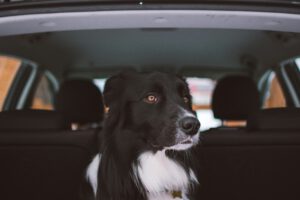
How should dogs (and other pets) be carried in the car according to the DGT?
According to the DGT, when travelling with your pet in the car, you must place a separator to prevent your pet from distracting you and
The veterinary spaying and neutering are common surgical procedures that contribute to the health, welfare and reproductive control for dogs and cats. In addition to preventing unwanted litters, in many cases they help to reduce the risk of certain diseases and behavioural problems.
At Benivet Benissa We assess each case individually, taking into account the age, state of health and characteristics of the pet, in order to indicate the best way to treat it. best time and apply safe surgical and anaesthetic protocols.
Benivet Benissa - Av. del País Valencià, 10, 03720 Benissa -
M-F 9:30-18:30 - S 10:00-13:00
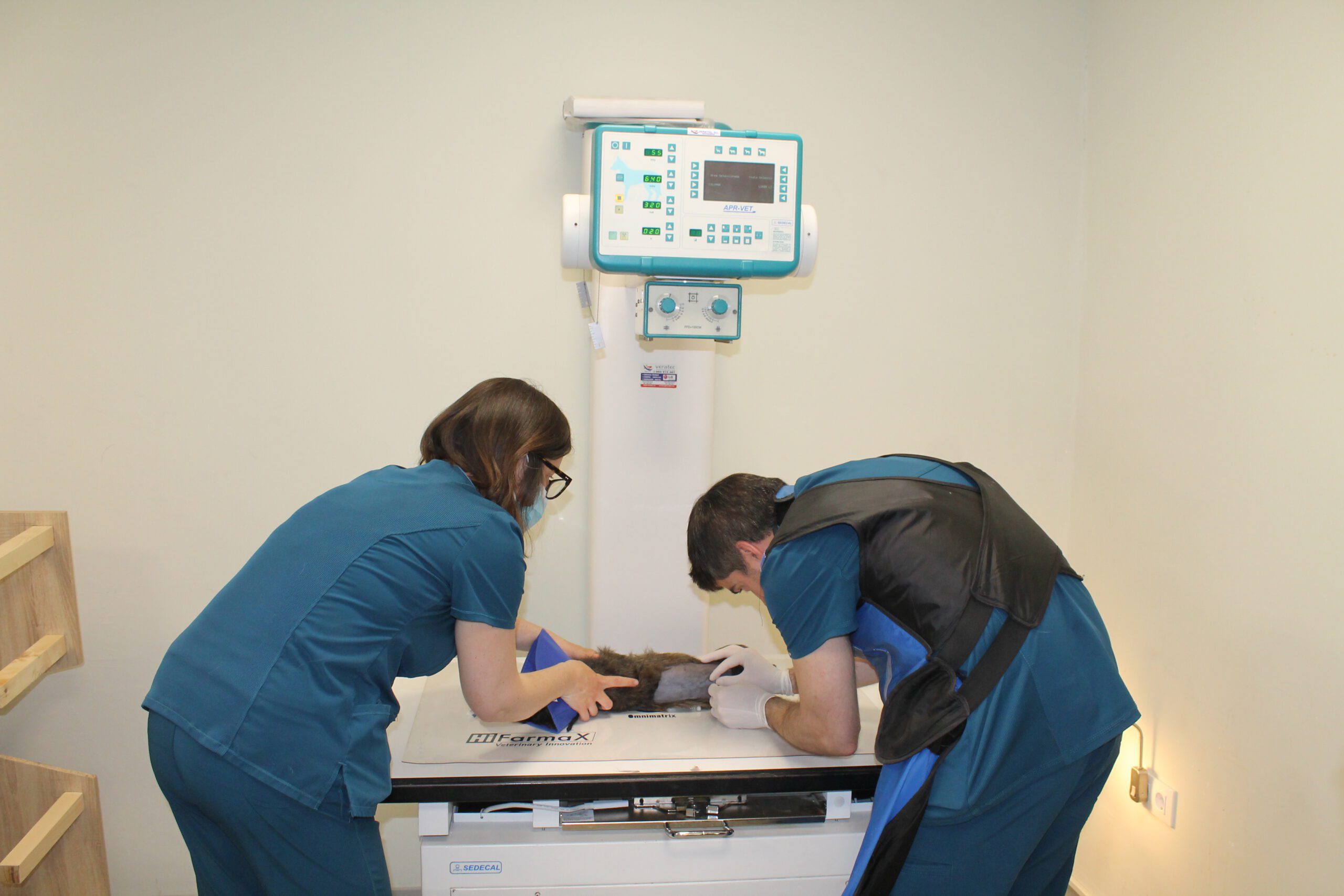
At Benivet Benissawe recommend the spaying and neutering as one of the most important decisions to ensure the well-being and health of your pet. Not only do these procedures prevent unwanted reproduction, but also reduce the risk of multiple diseases and behavioural disorders.
In bitches, spaying significantly reduces the likelihood of uterine infections (pyometra) and mammary tumours, especially if performed before the first oestrus. In males, neutering reduces the risk of prostate disease and testicular cancer, and helps to control behaviours such as territorial marking or aggression.
In our clinic we use modern surgical techniques, safe anaesthesia and a system of full monitoring. In addition, we offer a personalised post-operative follow-up and answer all your questions about pre- and post-procedure care.
This service is integrated within our area of specialised veterinary surgerywith the support of the veterinary pain unit for total control of comfort.
Further clinical information on the medical benefits of spaying and neutering can be found in the MSD Veterinary Handbook.
The veterinary spaying and neutering are key procedures for a calmer, safer and healthier life for dogs and cats. At Benivet BenissaWe perform these surgeries with a holistic approach that prioritises safety, disease prevention and behavioural improvement.
In addition to preventing unwanted litters, these procedures:
Reduce heat anxiety and unwanted behaviour.
They prevent psychological pregnancies in females.
Reduced escapes and fights between males.
They extend life expectancy by reducing the risk of hormonal pathologies.
Before each intervention we carry out a complete pre-surgical assessmentWe adapt anaesthetic protocols according to the patient and provide a clear and simple post-operative care guide for caregivers.
At Benivet, your pet will be in the hands of a specialised veterinary team with years of experience and advanced technology.
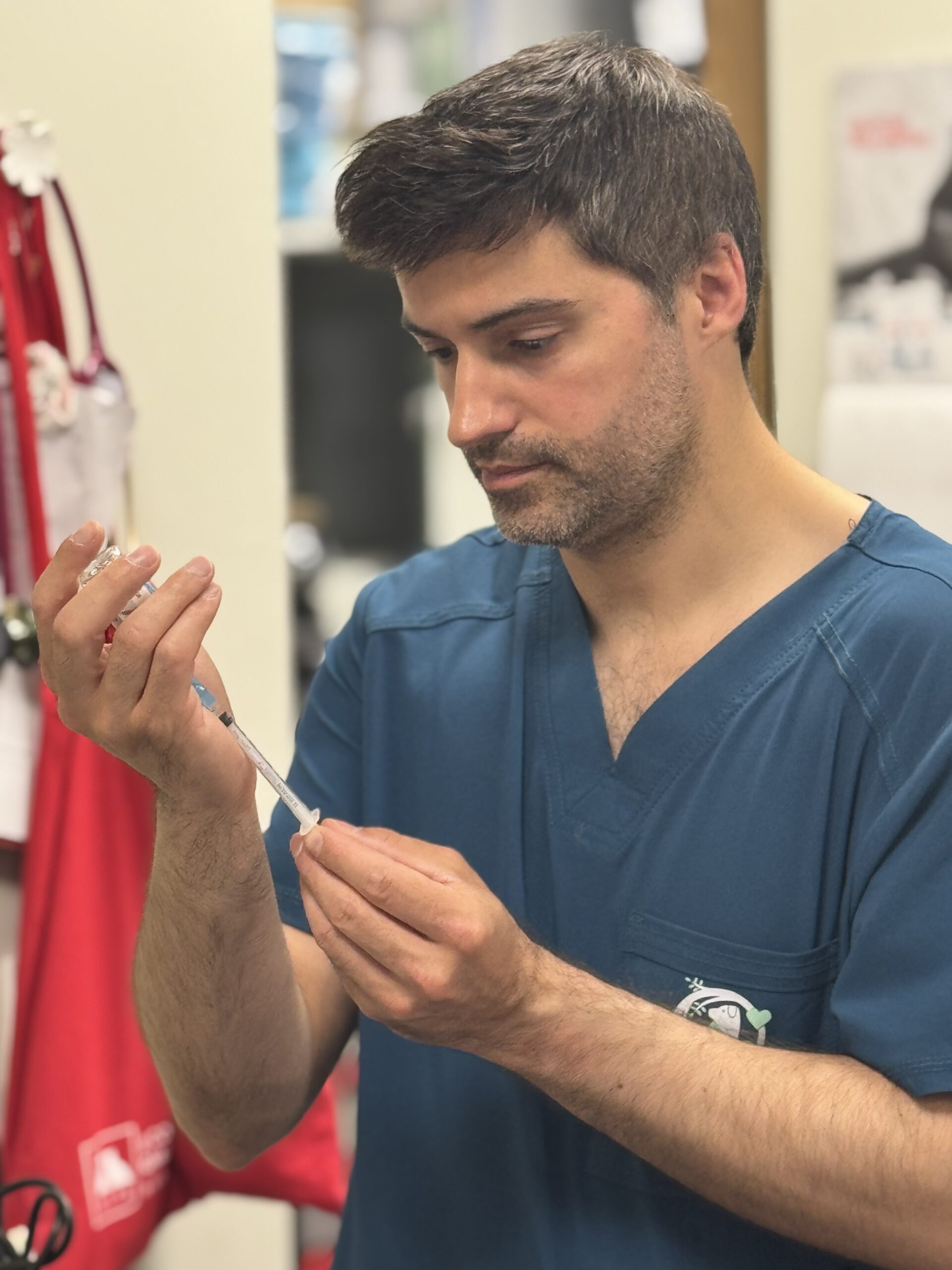
The indication for spaying or neutering depends on the age, health status and specific needs of each pet.
These procedures can help prevent certain diseases and long-term health problems.
Reducing the risk of reproductive pathologies
Prevention of unwanted litters
Improving health monitoring
In some cases, neutering helps to improve oestrus-related behaviours and reproductive stress.
Territorial marking
Behaviours associated with oestrus
Coexistence with other animals
Not all pets require the same approach; the decision must be made on an individual basis.
Age and health status
Size and breed
Lifestyle and environment
Although they are often used interchangeably in everyday language, castration and sterilisation do not mean exactly the same thing.
The sterilisation covers the procedures designed to prevent reproduction. The castration It involves acting on the gonads — the ovaries or testicles — and therefore also alters the production of sex hormones.
The most appropriate technique depends on the species, sex, age, state of health and the aim of the procedure.
Various surgical techniques can be performed on female dogs and cats. Depending on the individual case, the procedure may involve removing the ovaries or the ovaries and the uterus.
The choice of technique depends on factors such as:
The patient’s age and development.
Condition of the reproductive system.
The presence of any uterine or ovarian condition.
Medical history.
Assessment carried out prior to surgery.
Before making a decision, we carry out a veterinary check-up and we explain what procedure is being proposed and why.
In male dogs and cats, surgical castration usually involves the removal of the testicles.
As well as preventing reproduction, it can help to prevent testicular diseases and reduce certain behaviours directly linked to sex hormones.
However, neutering does not guarantee that all behavioural problems will disappear. Behaviours linked to fear, anxiety, learning or a lack of socialisation may require a specific assessment and a separate plan.
There is no single age that is best for all dogs and cats.
To advise on the timing of the procedure, we take the following into account:
Species and sex.
Age and stage of development.
Breed and expected adult size.
State of health.
Lifestyle.
Risk of unwanted pregnancy.
Living alongside other animals.
Medical history.
Preventative, reproductive or therapeutic reason for the surgery.
In large or giant breeds of dog, musculoskeletal development may be a factor in the decision. You can find out more in our guide on sterilisation in large breed dogs.
You can also check out the the benefits of neutering and the best time to have it done.
The procedure may offer benefits relating to family planning and the prevention of certain diseases. However, any recommendation should be made only after weighing up these benefits against the patient’s individual circumstances.
During the consultation, we’ll discuss the following with you:
Preventing unwanted litters.
Diseases of the reproductive system.
Behaviours associated with the heat cycle.
Risks associated with anaesthesia and surgery.
The best time to intervene.
Recovery and aftercare.
Possible changes in dietary requirements.
Alternatives are available where relevant.
The aim is to enable you to make an informed decision, without assuming that all animals require exactly the same procedure or should undergo surgery at the same age.
Castration can reduce certain behaviours directly linked to sex hormones, such as certain instances of running away, marking territory or seeking a mate.
However, it does not alter the animal’s basic personality, nor does it necessarily resolve problems relating to aggression, fear, anxiety or socialisation. The effect on behaviour depends on the cause of the behaviour, how long it has been occurring, and other individual factors.
We therefore do not recommend surgery solely on the basis of the promise that it will correct a behavioural problem without first assessing the case.
Following castration or sterilisation, the energy requirements of some animals may change. This does not mean that weight gain is inevitable.
To help maintain an appropriate body condition, we recommend:
Check the daily amount of food.
Measure out the portions.
Keep an eye on treats and snacks.
Take part in activities suited to your age and fitness level.
Weigh yourself regularly.
Check their diet if any changes occur.
If you are overweight or find it difficult to adjust your diet, you can draw up a plan using the service provided by veterinary nutrition.
Before the procedure, we review the patient’s medical history and carry out a general examination. Depending on the patient’s age and state of health, a pre-operative blood tests or other tests.
The team of veterinary anaesthesia and analgesia tailors the treatment plan and pain management to the needs of each dog or cat.
The intervention forms part of the veterinary surgery, with monitoring during recovery and the provision of instructions for care at home.
See also What happens when a pet needs elective surgery?.
Spaying or neutering should not be an automatic decision based solely on age. At Benivet Benissa, we assess each patient’s individual circumstances and explain the benefits, limitations, the procedure and aftercare.
Would you like to know when the best time is for your dog or cat? Request a valuation in Benivet Benissa or call +34 622 325 271.
Benivet Benissa
Av. del País Valencià, 10, 03720 Benissa, Alicante
Telephone: +34 622 325 271
Opening hours: Monday to Friday from 09:30 to 18:30; Saturdays from 10:00 to 13:00.
Trustindex verifica que la fuente original de la reseña sea Google. Muchas gracias a toda la gente que trabaja en Benivet ☺️ Son profesionales y gente muy amable. Mi gata Mini está mucho mejor gracias a ellos. Son un gran equipo y el trato a los animales no puede ser mejor, los tratáis genial. Sin duda siempre volvemos!!Publicado en GoogleTrustindex verifica que la fuente original de la reseña sea Google. Todo genial! Muy recomendable.Publicado en GoogleTrustindex verifica que la fuente original de la reseña sea Google. Súper professionals, es nota que els agrada el que fan. Molt contenta.Publicado en GoogleTrustindex verifica que la fuente original de la reseña sea Google. Atención inmejorable, profesionalidad indiscutible!! Son un equipo de 10! Conocí a Ana y Andrea hace ya 4 años y estoy encantada de poder contar con ellas y confiarles la salud de mis mascotas! Transmiten el amor por la profesion y los animales!! Es un placer poder contar con todo el equipo!! Muchas gracias chic@s !!Publicado en GoogleTrustindex verifica que la fuente original de la reseña sea Google. Onze hond had een splinter in zn poot, we konden direct terecht en uurtje later konden we hem weer ophalen, operatie en een narcoseprik samen voor maar €. 90.00 maar wat een lieve maar vooral professionals......TOPPublicado en GoogleTrustindex verifica que la fuente original de la reseña sea Google. Para mí es el mejor veterinario de la zona , siempre el mejor trato y con los mejores resultados .Publicado en GoogleTrustindex verifica que la fuente original de la reseña sea Google. This vet is amazing. We travel from Calpe to Benissa for their services. The staff are friendly, knowledgeable and so helpful.Publicado en GoogleTrustindex verifica que la fuente original de la reseña sea Google. Estoy muy contenta con este veterinario, la atención siempre ha sido muy buena y personalizada y las veterinarias tratan a Queen con mucho cariño, a pesar de sus ladridos :)Publicado en GoogleTrustindex verifica que la fuente original de la reseña sea Google. Super cercanos, dispuestos siempre a ayudarte y muy pendientes de los animalitos. Son un equipo increíble!
The veterinary spaying and neutering can be recommended for reasons of health, well-being and prevention (according to species, age, lifestyle and medical history). At Benivet Benissa we assess each case on an individual basis and, if it is necessary to plan the intervention with maximum safety, we indicate tests only when they provide useful information:
Veterinary practice in Benissa: complete examination, review of the history and resolution of doubts (recommended age, care, recovery).
Blood testsPre-anaesthesia check-up to assess general condition and safety, especially in elderly patients or those with previous illnesses.
Urinalysisuseful adjunct if urinary signs, history or to refine renal/metabolic assessment prior to procedure.
Veterinary ultrasoundif there is suspicion of reproductive disorders (e.g. irregular oestrus, secretions, abdominal pain) or to assess uterus/ovaries/testes when the case requires it.
If the surgery is scheduled, we coordinate the protocol with anaesthesia and analgesia for safe, multimodal pain management, and we carry out the procedure from veterinary surgery with clear indications for home care and check-ups.
After neutering, many pets need to adjust their diet and rations: if you're concerned about weight, we work with veterinary nutrition to prevent overweight.
👉 If you want to assess the best time to spay/neuter and the pre-surgical plan, request an appointment here or call +34 622 325 271.
According to the DGT, when travelling with your pet in the car, you must place a separator to prevent your pet from distracting you and

Only a veterinarian can assess the health status of the animals, taking also into account other circumstances such as the type of
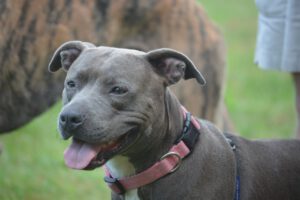
Domestic or companion animals, particularly those belonging to the canine species, shall also be classified as potentially dangerous,
Castration or neutering is an elective surgical procedure: the patient is assessed beforehand, and their recovery is then supported by other services offered by the clinic.
The procedure is carried out by the surgical department, with monitoring during recovery and instructions for care at home.
An anaesthetic protocol tailored to each dog or cat, and multimodal pain management during and after surgery.
Pre-anaesthetic assessment to evaluate the patient’s general condition, particularly in elderly patients or those with pre-existing conditions.
A preliminary assessment to determine the most appropriate time and to explain the proposed procedure.
If reproductive problems are suspected, or if it is advisable to examine the uterus, ovaries or testicles before proceeding with surgery.
After neutering, energy requirements change; we help to adjust the diet to prevent weight gain.
The ideal age depends on the species, breed and context of the individual animal. As a guideline, many dogs and cats can be sterilise from 6 months onwardsHowever, in larger breeds of dog it is sometimes recommended to consider surgery at a later date. At Benivet Benissa We study the individual case (size, character, cohabitation, health history) before suggesting the best time for your pet.
Spaying or neutering helps to preventing hormone-dependent diseases (such as uterine infections or certain mammary tumours in females, and prostate problems or some testicular tumours in males). In addition, it can reduce oestrus-related behaviours (marking, escapes, fighting) and prevent unwanted litters. In the consultation we will explain in detail the benefits and also the possible limitations in each case.
It is a planned surgery which is carried out under general anaesthetic. Beforehand, at Benivet Benissa we assess the animal's state of health and, if necessary, we carry out the following procedures pre-anaesthetic analysis or other tests to increase safety. The procedure is usually of short duration and the patient recovers in the clinic until they are awake, stable and with well-controlled pain. Afterwards, we give you clear instructions for home care.
During surgery we use multimodal anaesthesia and analgesia so that the patient does not feel pain. After the operation, we prescribe analgesic medication for home and review the evolution in the following days. It is normal for your pet to be calmer or somewhat drowsy for the first few hours, but it should not be in severe pain; if you notice anything that worries you, we ask you to contact the clinic to adjust the treatment.
Sterilisation can help reduce sex hormone-related behaviours (marking, escapes in oestrus, some fighting), but does not change the basic personality of your dog or cat. In terms of weight, some animals tend to put on weight if the same amount of food and the same level of exercise is maintained. For this reason, after surgery we recommend adjust ration, choose appropriate food and maintain regular physical activity. to keep your pet at its ideal weight.
The decision is not the same for all patients. Although spaying or neutering has important benefits, there are situations (certain breeds, previous medical problems, advanced age, responsible breeding objectives) where it is appropriate to assess pros and cons in more detail. At Benivet Benissa we review the clinical history, carry out a complete examination and answer your questions so that you can make an informed decision adapted to your pet.
Do you have any doubts about care, treatment or prevention for your pet? Consult our section of Frequently Asked Questions where we solve the most common queries about dogs and cats.